






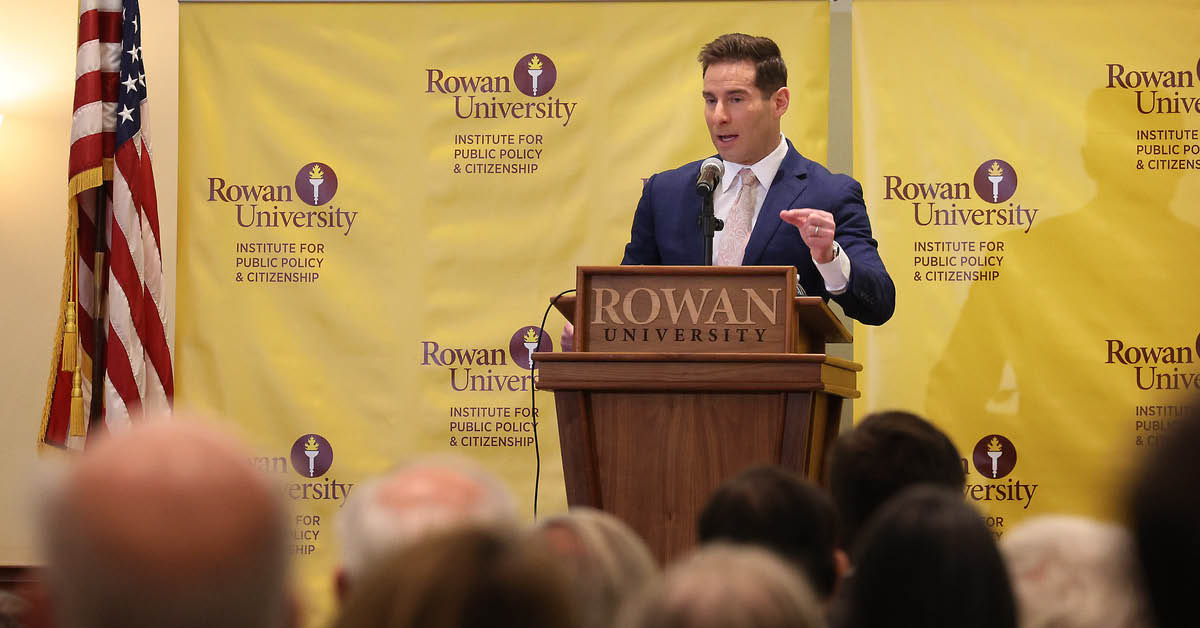
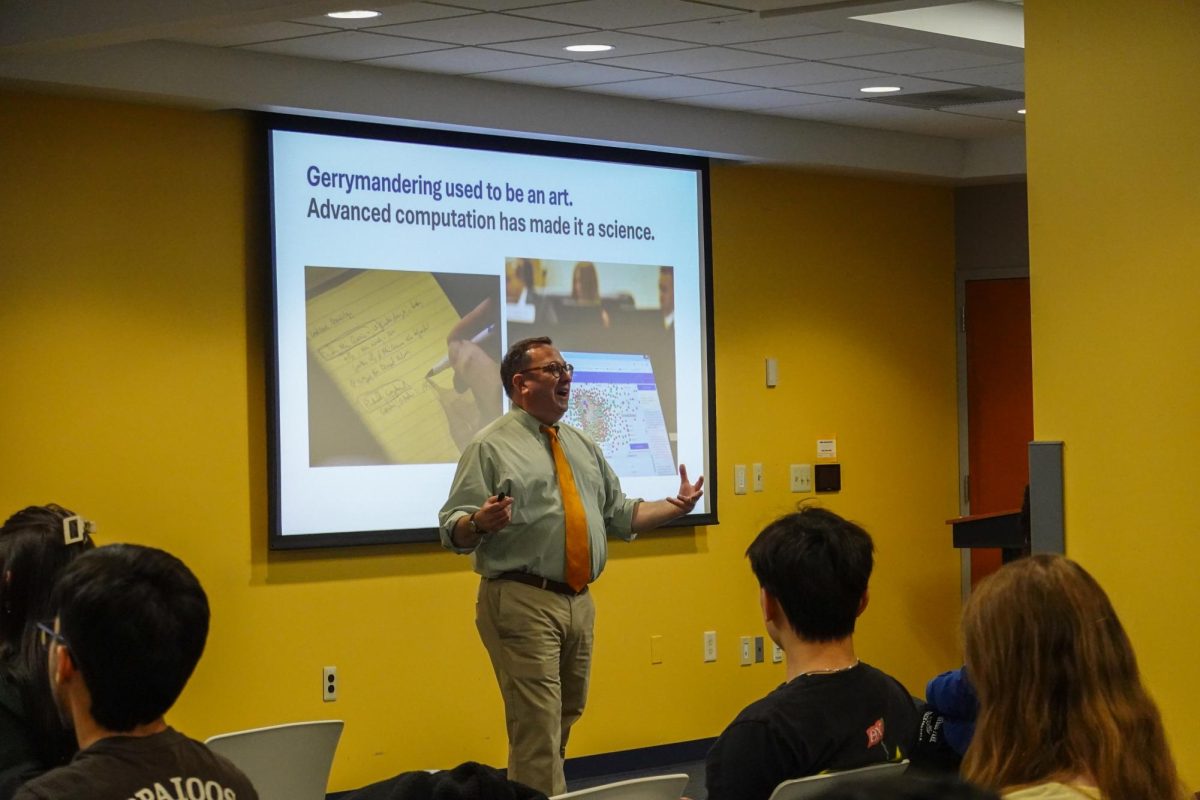












































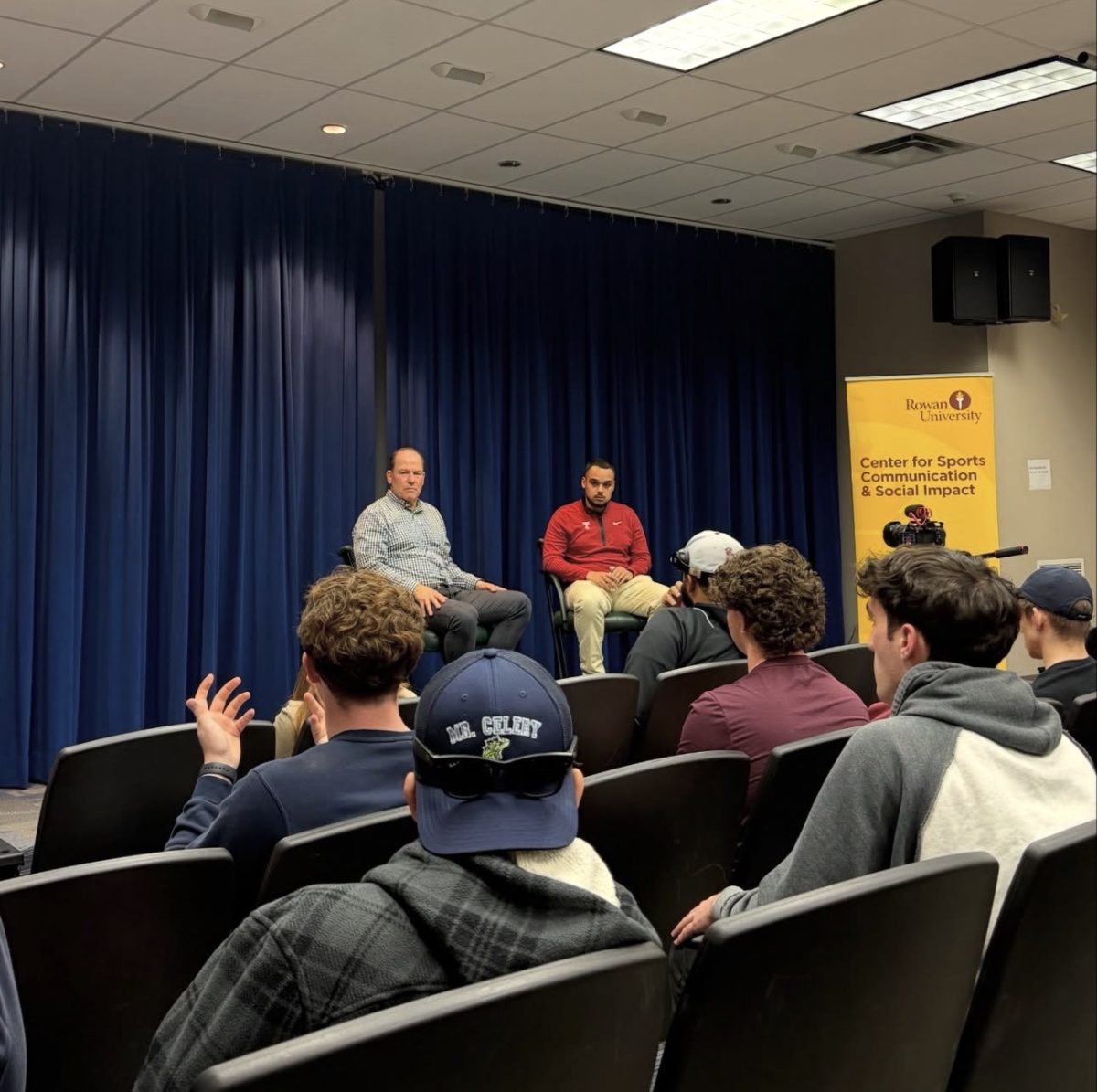
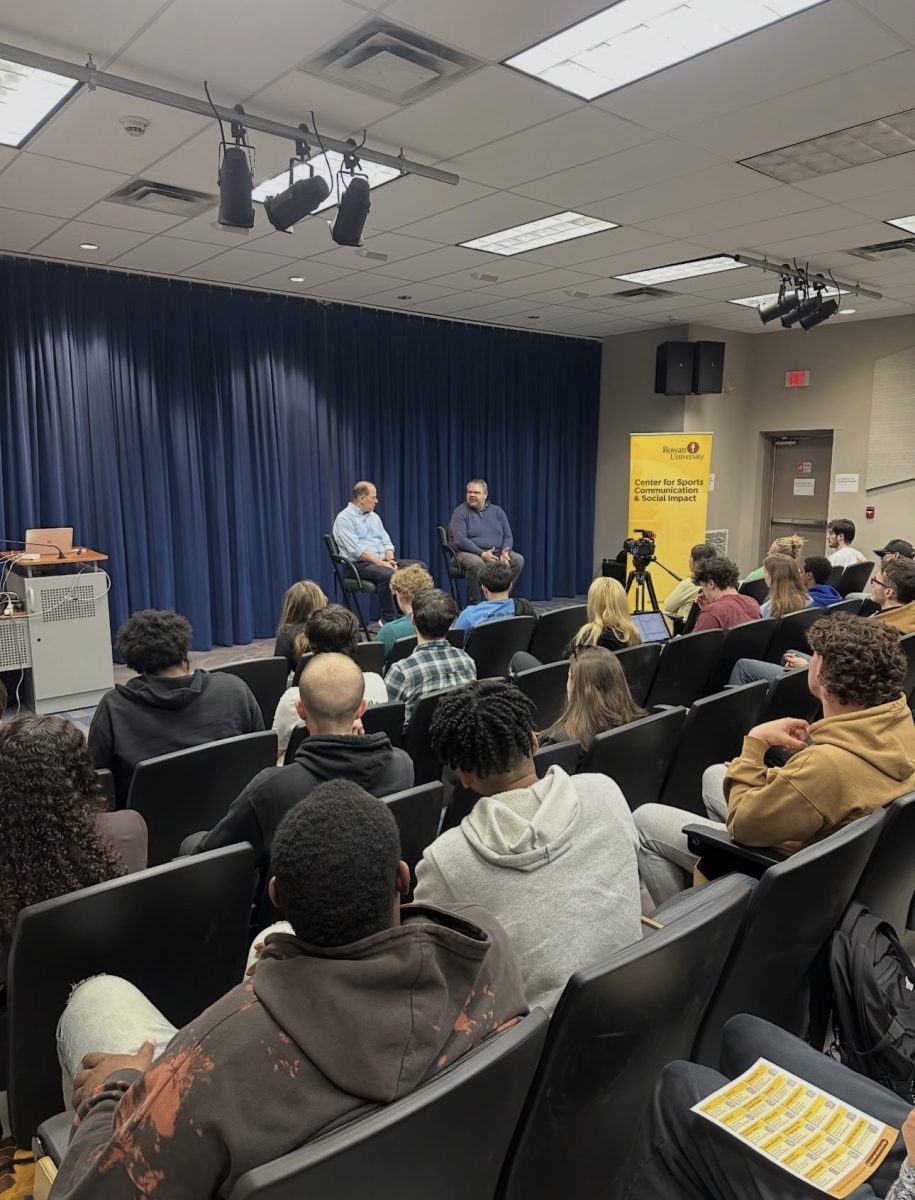
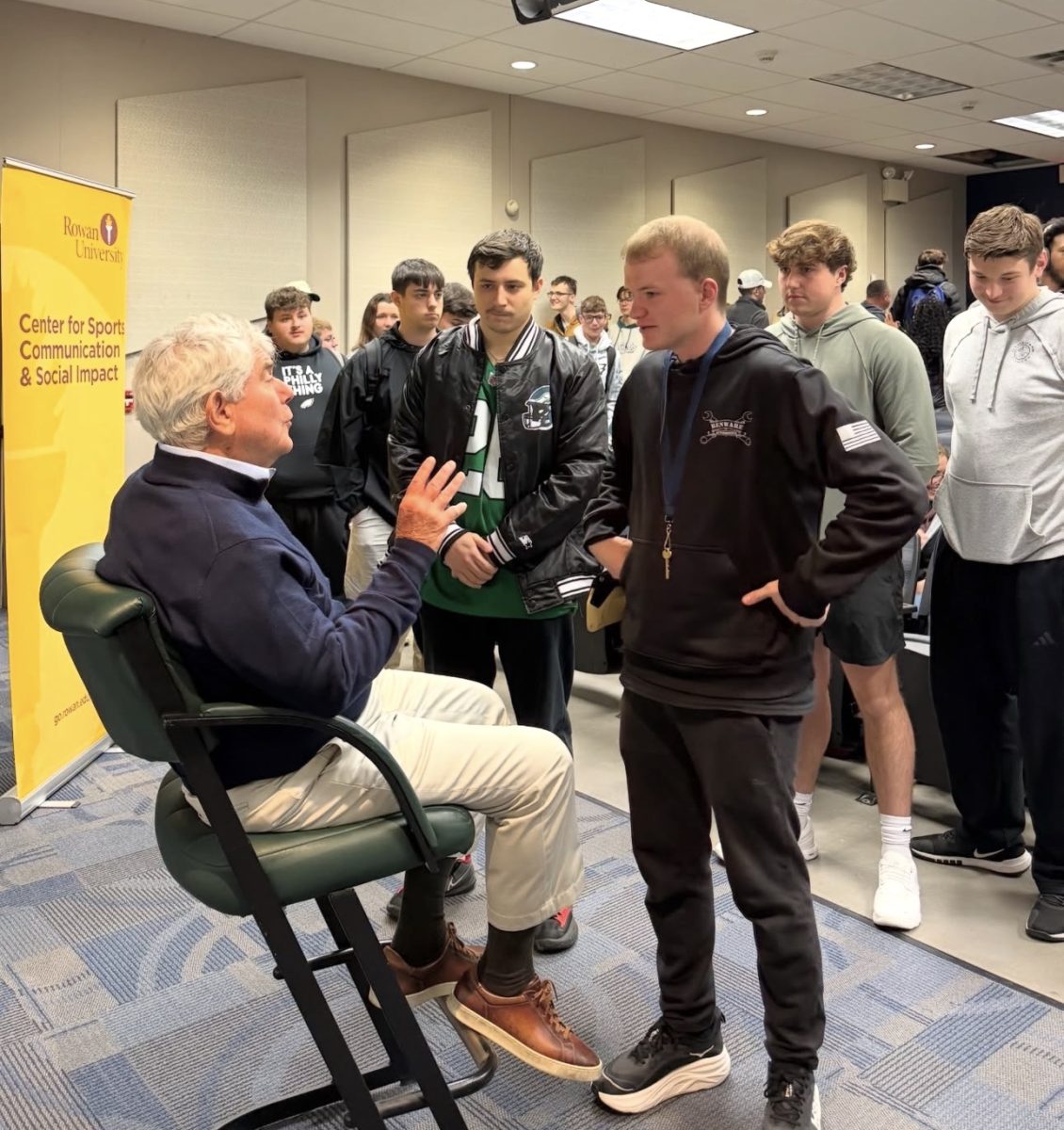
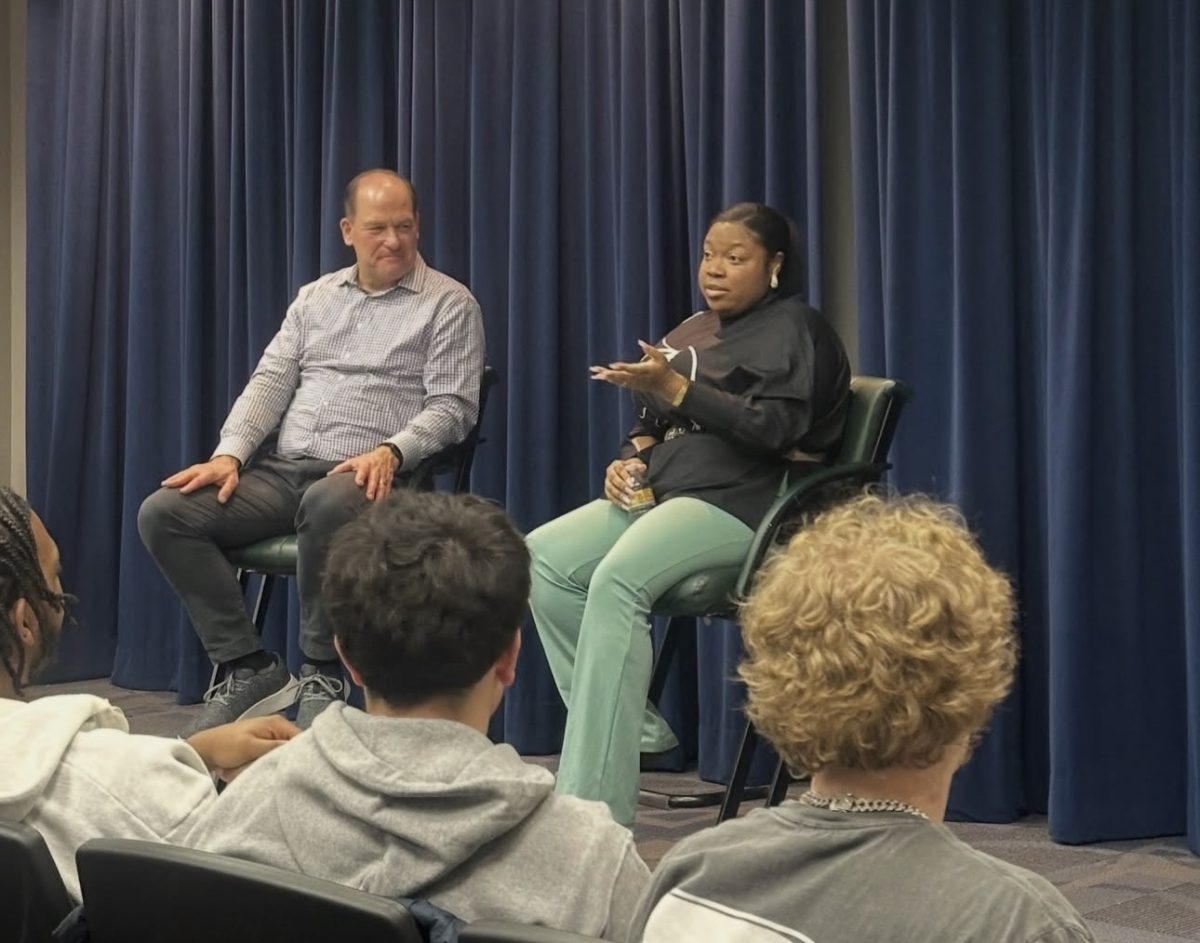
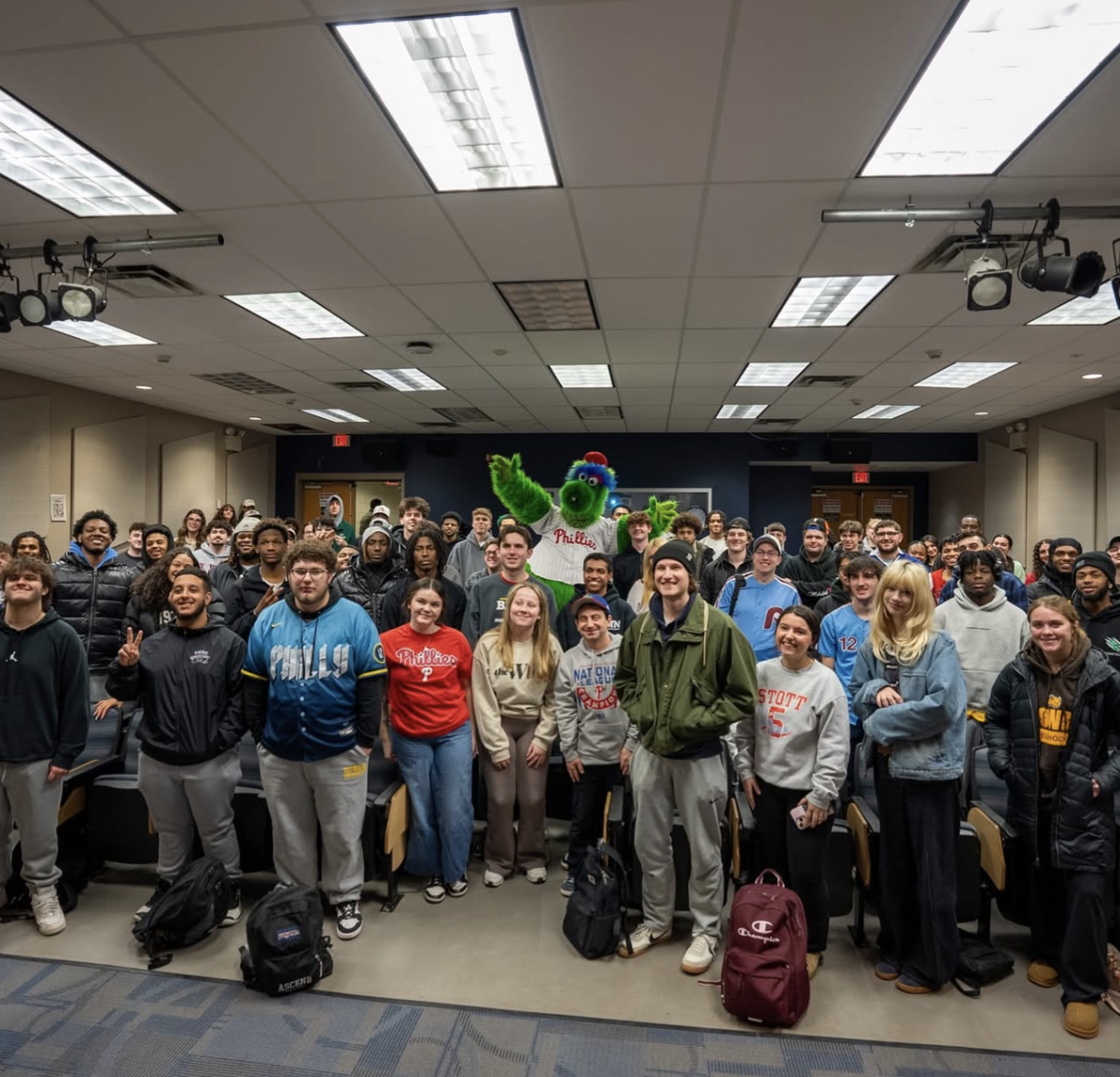



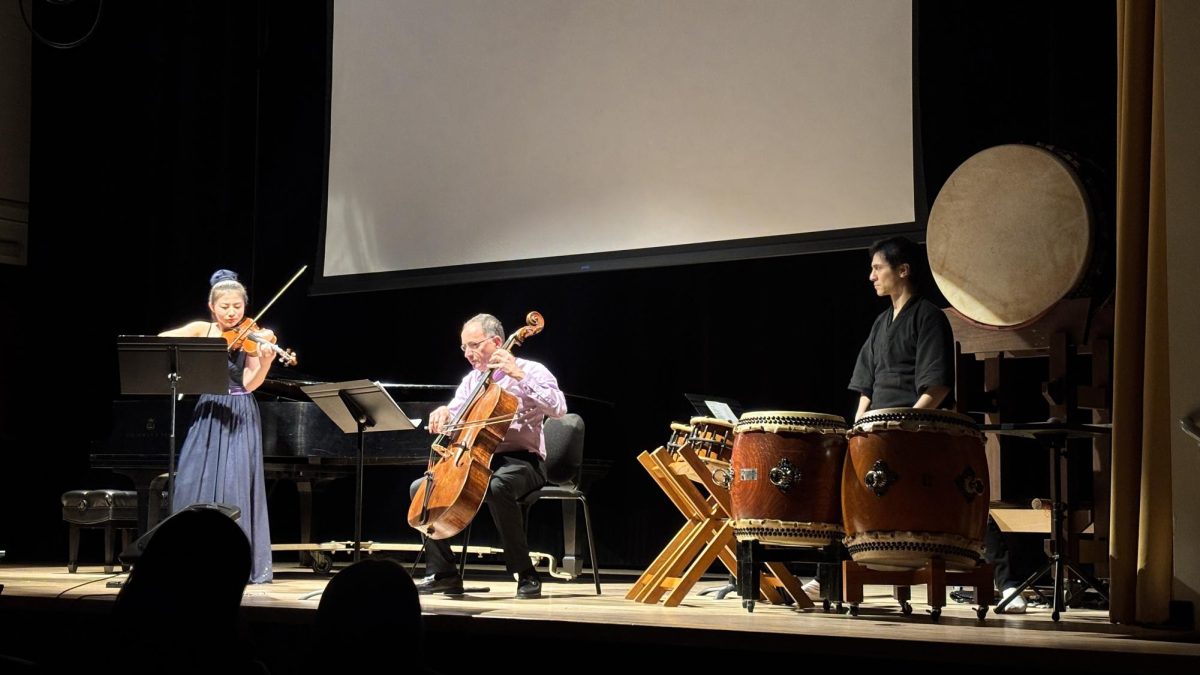


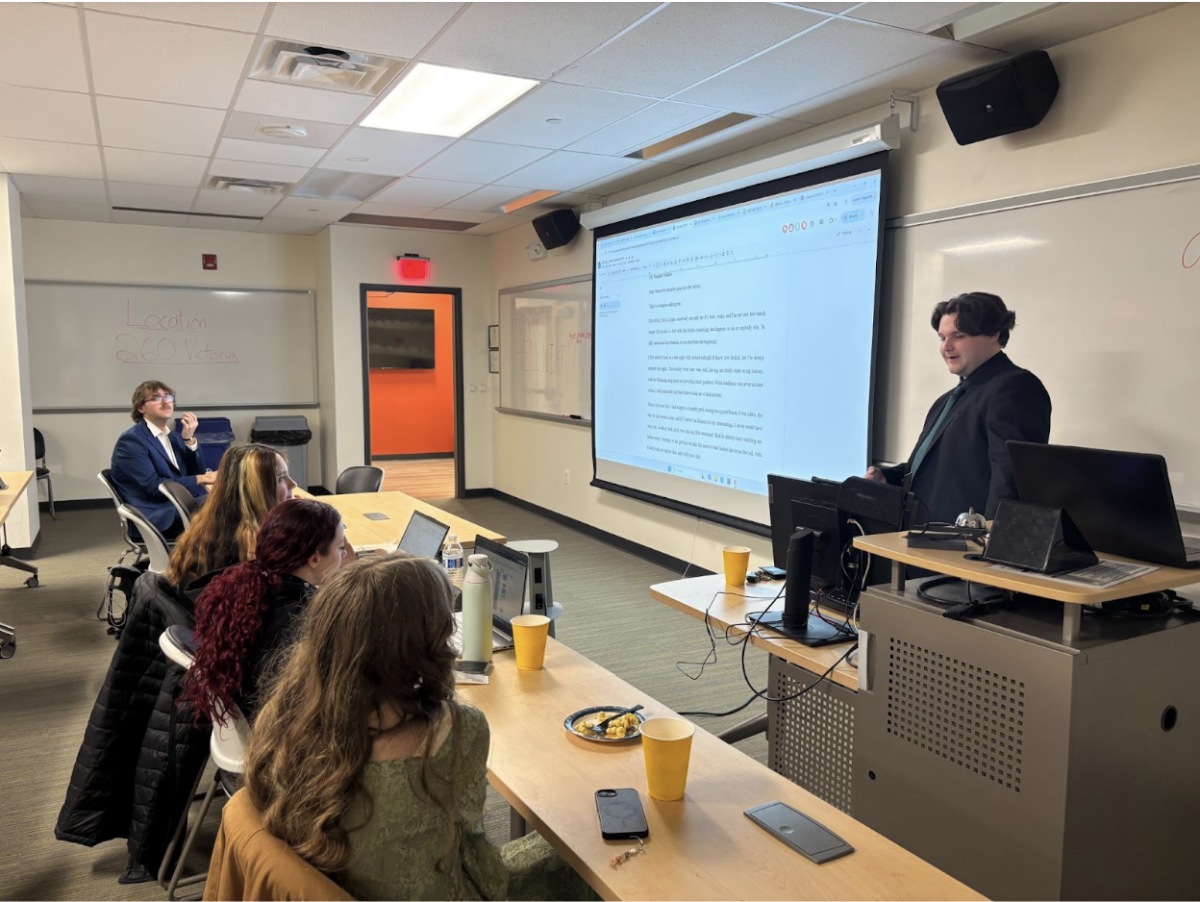













As artificial intelligence (AI) continues to rapidly change the music industry, local experts in the field gathered at Rowan University to discuss its impact, challenges, and future potential. On Monday, Nov 3, the Philadelphia chapter of the Recording Academy hosted an Advocacy Town Hall panel in Boyd Recital Hall. The moderated discussion was focused on AI in the music industry and what that would look like in the future.
The doors opened up at 6:30 PM with a welcome reception in the Wilson Hall Lobby. Attendees enjoyed refreshments as they interacted with each other. A Grammy U Ambassador DJayed the event. The Recording Academy Staff had been planning this event for 7 months.
“I know the Recording Academy is best known for putting on the Grammys every year, but advocacy is a really important part of what we do,” said Kim Alton, senior director of advocacy and public policy for the Recording Academy and moderator for this event.
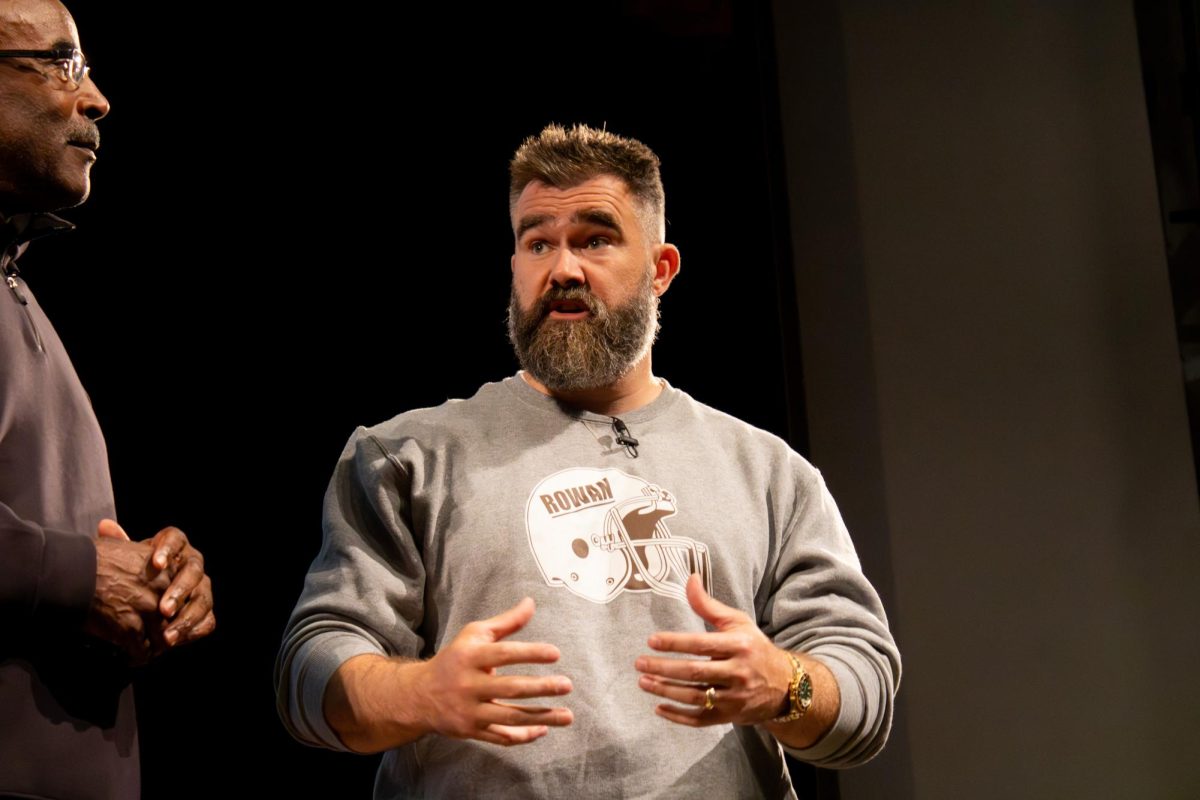
Alton and three panelists discussed and answered questions about AI tools in music, legislation regarding copyright, and current ongoing legal battles.
Many have expressed concerns about the legal future of AI-generated music and what that might mean for copyright laws. There have been guidelines provided in regards to AI and copyright. However, there are currently no copyright laws that completely protect AI-generated music.
“I think it’s really a day-by-day evolution that we’re seeing before our eyes, which, to me, is really exciting,” said Jason Berger, entertainment attorney and partner at Lewis Brisbois in Philadelphia.
Berger also spoke about the current lawsuit against AI music generators and how the outcomes will affect legislation going forward.
“There are some big cases that are in the federal courts now that are really narrowing what is okay and what isn’t,” said Berger. “If there are decisions on those, I think it’ll become clearer.”
While some industry professionals remain cautious about using AI in their work, others see its potential to simplify the more tedious aspects of music production.
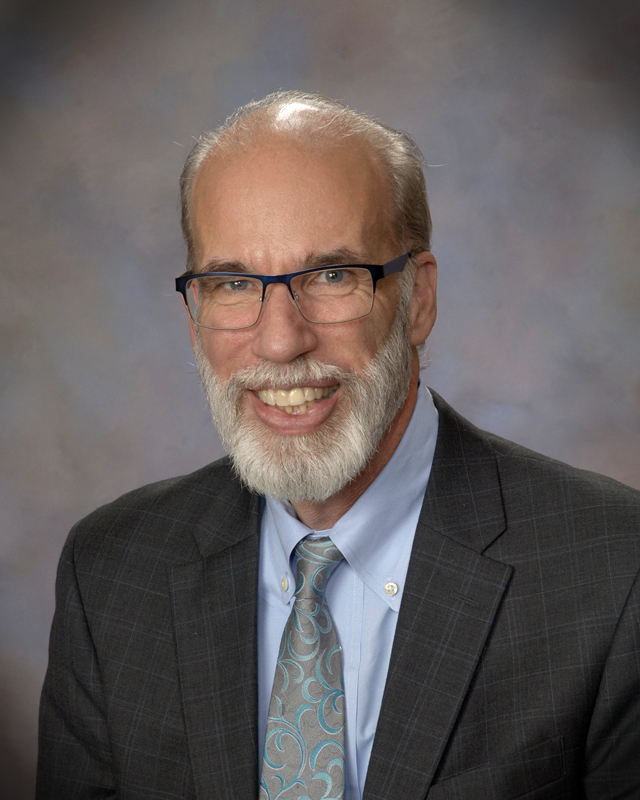
“Budgets for mastering and production are getting squeezed constantly,” said Adam Hager, producer and professor at Rowan University. “It helps if I can keep the hours that I spend on the actual mastering and not troubleshooting problems with revised mixes being resubmitted and things.”
With these legal settlements coming in, questions arise about what this would mean for artists and how AI and copyright will show up in music label deals.
“It’s still the law that the artist doesn’t get paid when their song is played on the radio,” said Berger. “It’s haunting to me to think how long it would take, as the technology progresses as quickly as it has, for there to be the right legislative fix.”
For artists who feel uneasy about AI’s role in the music industry, the panelists offered reassurance and insights about how they can protect themselves and their music.
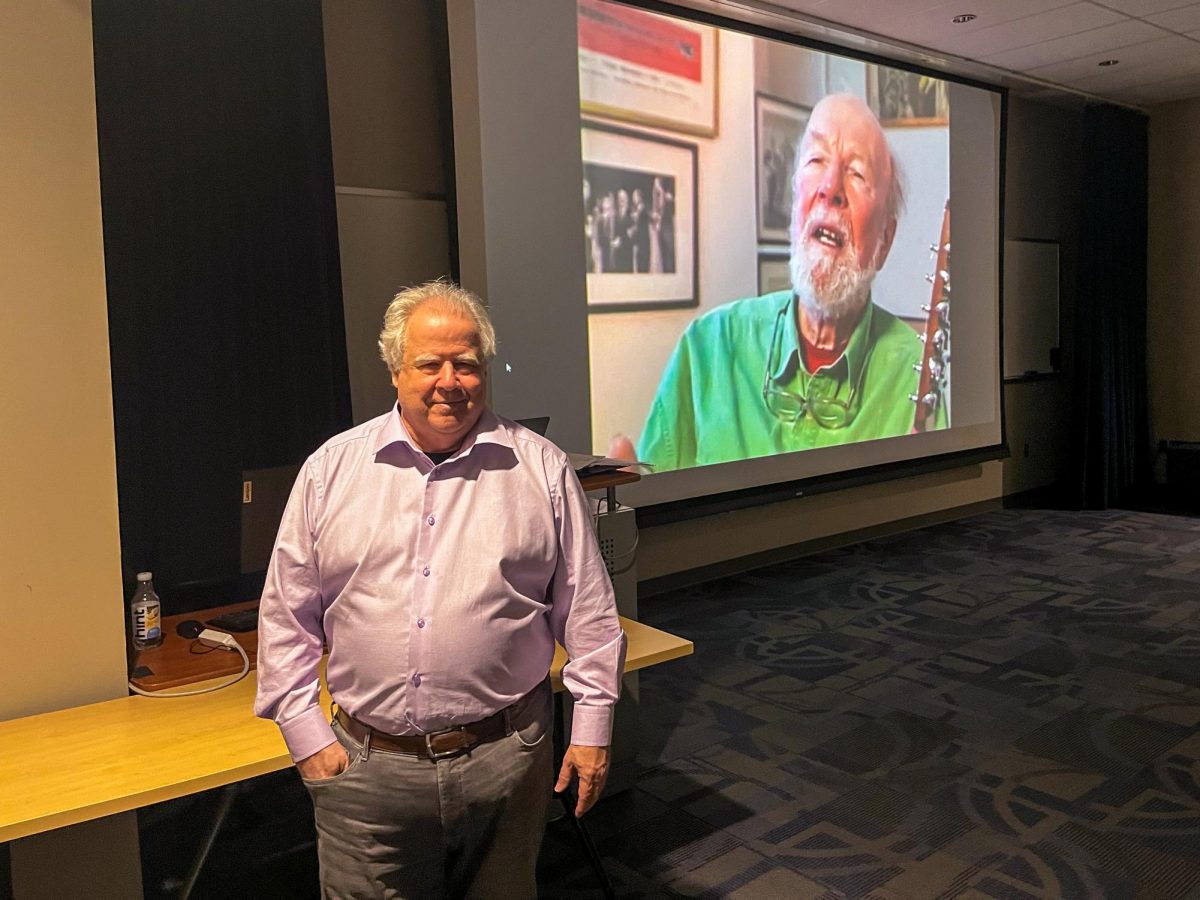
“There are companies that have committed to only using properly licensed material for training or public domain things,” said Dr. Youngmoo Kim, vice provost for university and community partnerships at the Excite Center at Drexel University. “I think that if consumers make those choices, put a little more pressure on those companies, and if we use our power to push in that direction, that will also help.”
“I think there’s a lot of practical implications and uses to help generally protect your music from being in someone else’s hands that you don’t want it to be,” said Berger.
“It’s going to get worse before it gets better,” said Hager. “I’m all about using it as an assist.”
Students and artists left feeling reassured about what the future holds for AI-generated music.
“I thought it was very informative, so I’m glad I came,” said Jordyn Grier, senior music industry major. “I can see how AI can be a positive thing where it’s used as a tool, but also I can see how it’s a negative effect where it can take over, and it doesn’t really have that same effect as the human experience when writing. I think them talking about that really got me thinking and amplifying my thoughts about it.”
The night ended with attendees being urged to keep having conversations about how AI will continue to shape the music industry and more.
“We wanted to hold this event, not to have all the answers, but to get your minds flowing,” said Ramon Jones, executive director of the Philadelphia Chapter of the Recording Academy. “No one is too old to fully immerse themselves in what’s going on right now, ’cause it’s gonna affect every aspect of all of our lives.”
For comments/questions about this story DM us on Instagram @thewhitatrowan or email [email protected]