




























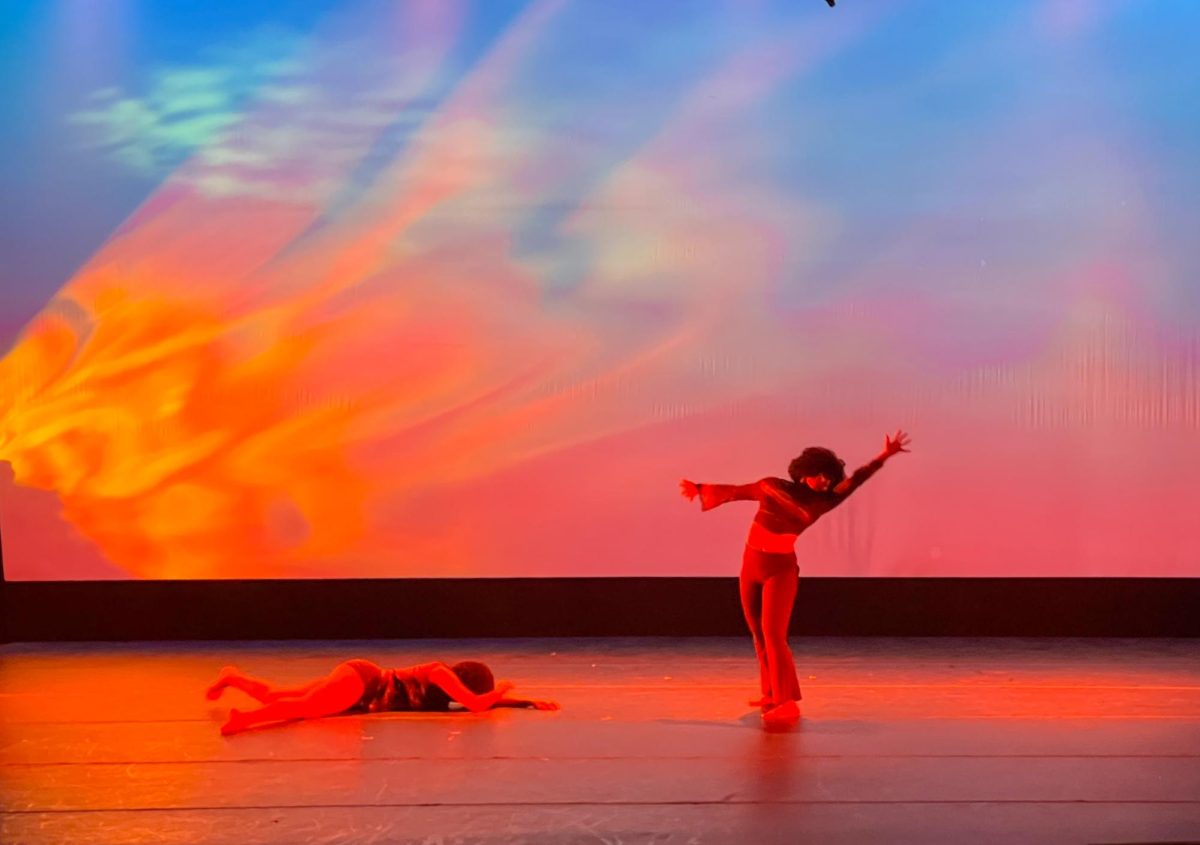

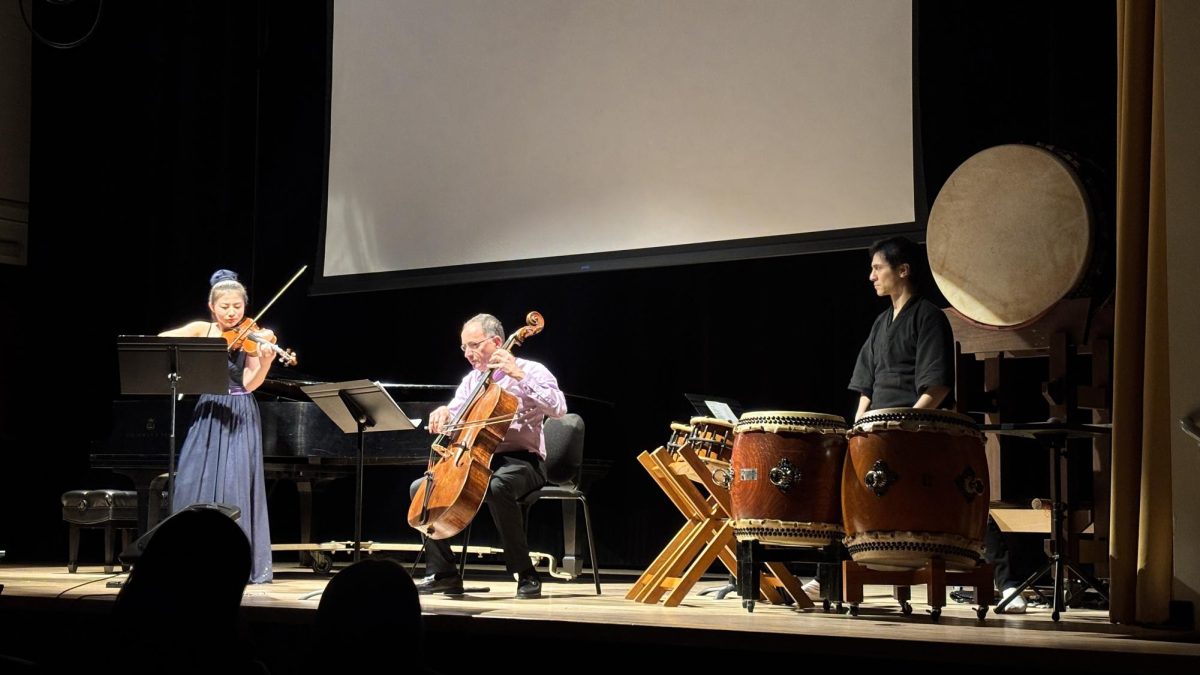












Cellist Udi Bar-David brought a multimedia performance and storytelling of the Holocaust and the atomic bombing of Hiroshima to Rowan University. On Monday, March 3, Bar-David presented Strings of Hope at Boyd Recital Hall. The show combined live music, film, and historical storytelling.
The performance took the audience on a journey of violins that endured World War II and the artists who once played them. It honored both the instruments and the history they carry. Through music and visuals, the program reflected a connection between past tragedy and the present.
The idea behind the program came from the belief that music can express history in ways words sometimes can’t. By bringing together instruments once played in places like Hiroshima, Vienna, and Shanghai, the program connected different cultures and brought past communities back to life through sound.
The performance opened with taiko drummer Joe Small performing a powerful solo piece, followed by a solo piece from Bar-David on the cello. The contrast between the drums and strings set the tone for the evening.
In between performances, mini-segments of film were played from documentaries to help move the story along and give the audience context for the history of the violins. The clips included the origins of the violins, the history of the musicians, and featured artists playing them. These segments helped the audience understand the deeper meaning that Strings of Hope tries to convey.
15-year-old Japanese violinist Mio Imani also played the audience solo pieces. Imani also performed duet pieces with pianist Keiko Sato.
Bar-David, Imani, and Small later performed two traditional Japanese folk songs as a trio. The artists added their own improvised twists to the pieces.
The performance reflected the belief in the power of music to connect people across cultures and history.
“I always believed that art and music are a great language,” said Bar-David. “It is the best language to communicate.”
Bar-David and Sato closed out the night with a Jewish prayer song. The final piece brought together themes of loss, faith, and hope.
The theme of connection across cultures was clear by the end of the night, and the performance left a strong impression on audience members.
“I’ve seen the Strings of Hope concert before, so I had high expectations, which were met,” said Lucy Hooper.
The concert served as a reminder that even after tragedy, art can endure and continue to tell important stories. Strings of Hope will be performed with the original violins on April 19th at Lafayette College.
“The biggest takeaway is that music is the universal language,” said Michael Burns.
For comments/questions about this story, DM us on Instagram @thewhitatrowan or email [email protected]