





















































































When our country was founded in 1776, people had to attend local news readings at town halls, homes, and other gathering places in order to stay informed. They would often hear from one of the roughly 600 newspapers in circulation. These papers were only four pages long and contained propaganda and days-to-week-old information. The news was not only hard to come by but also incredibly valued for its rarity and information.
Today, news is so readily available that you can find it on Snapchat, an app where you can put a filter of Shrek kissing you on your photos.
A study from the Pew Research Center shows that roughly 50% of teenagers get their news from the social media platforms TikTok, Instagram, and Snapchat, while another study shows that 50% of adults get their news from platforms such as Facebook, Instagram, X, and Truth Social. We are now able to interact with both global and local stories, from a range of perspectives, at any time. Despite this privilege, people tend not to act beyond reading the headline of the article, a system that media companies thrive on. The more clicks, the more money, and as a result, less truth.
Penn State researchers found that in a study of around 35 million Facebook posts, 75% of news links, many of which were political, were shared without the user clicking through to read the article first. One can only imagine that this statistic extends, and maybe to a further degree, to TikTok, Instagram, Snapchat, and X.
Today’s news landscape has become like a library filled with people eagerly and convincingly trying to explain every book, even though few have even cracked one open to read it.
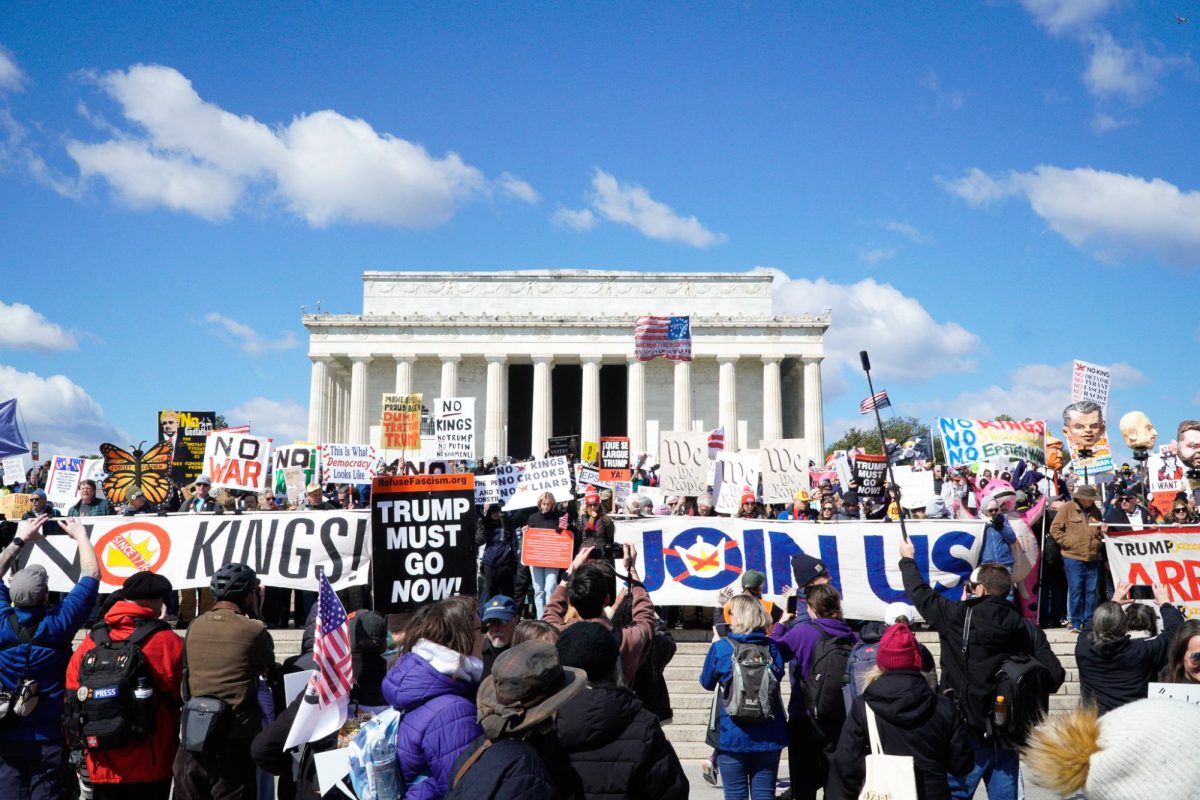
It has been said countless times, and rightfully so, that the key to a functioning democracy is an informed citizen. Although we live in a time where people might be more aware of the news, awareness does not equate to informedness. And if this misunderstanding continues, our democracy may no longer function.
Now I know this is a tired threat that has been used repeatedly in American politics. Communism, foreign nations, rigged elections, and even individual people have all fallen under the category of a “threat to democracy” by the government and media.
I have always taken these threats as largely hyperbolic because our constitution and even the government have protected us from such “threats” in the past, getting us through some of the darkest times of our country’s history. But the current climate feels different.
Today, American citizens’ response to the widespread availability of news and information is a natural withering of the pieces that are required for a successful democracy, leading to people becoming informed on lies, rather than the truth.
Many Americans get their news not just from social media but from online influencers and podcasts. Joe Rogan, Candace Owens, and Tucker Carlson all have a spot on Spotify’s top 20 podcasts, with them making it in the top 5 of trending podcasts. Disproven conspiracy theories about vaccines, “the deep state,” the 2020 election, and climate change have been discussed across these three shows, again showing a large portion of Americans’ willingness to deny facts.
For example, the “great replacement theory” claims that white people are being deliberately replaced in Western civilization. The theory was once a fringe theory found in online forums, until Tucker Carlson became an outspoken supporter of the theory, even discussing it on Fox News.
“To abandon facts is to abandon freedom. If nothing is true, no one can criticize power,” said Timothy Snyder in his book, “On Tyranny.”
If a large portion of Americans don’t trust the courts, elections, science, or the media, but instead trust the plethora of information at their fingertips, whether it is true or not, democracy does not work. And like Snyder said, “no one can criticize power.”
The way to counter this problem is through the consumption of accurate information. If Americans decline the privilege to read more than just headlines of news they see briefly on social media, or consume proven wrong information, the issue remains.
I do not think we are too far gone, or that we as Americans can’t change and patch the crumbling walls of the pillars of our democracy. As an American, I hope that people take the time and do their own research, and as a journalist, I hope that means reading more than just the headlines or getting news from social media. Without practicing our privilege to criticize the powerful and to educate ourselves, we are abandoning what makes democracy what it is. And without that, the American experiment fails.
For comments/questions about this story, DM us on Instagram @thewhitatrowan or email [email protected]