





























































































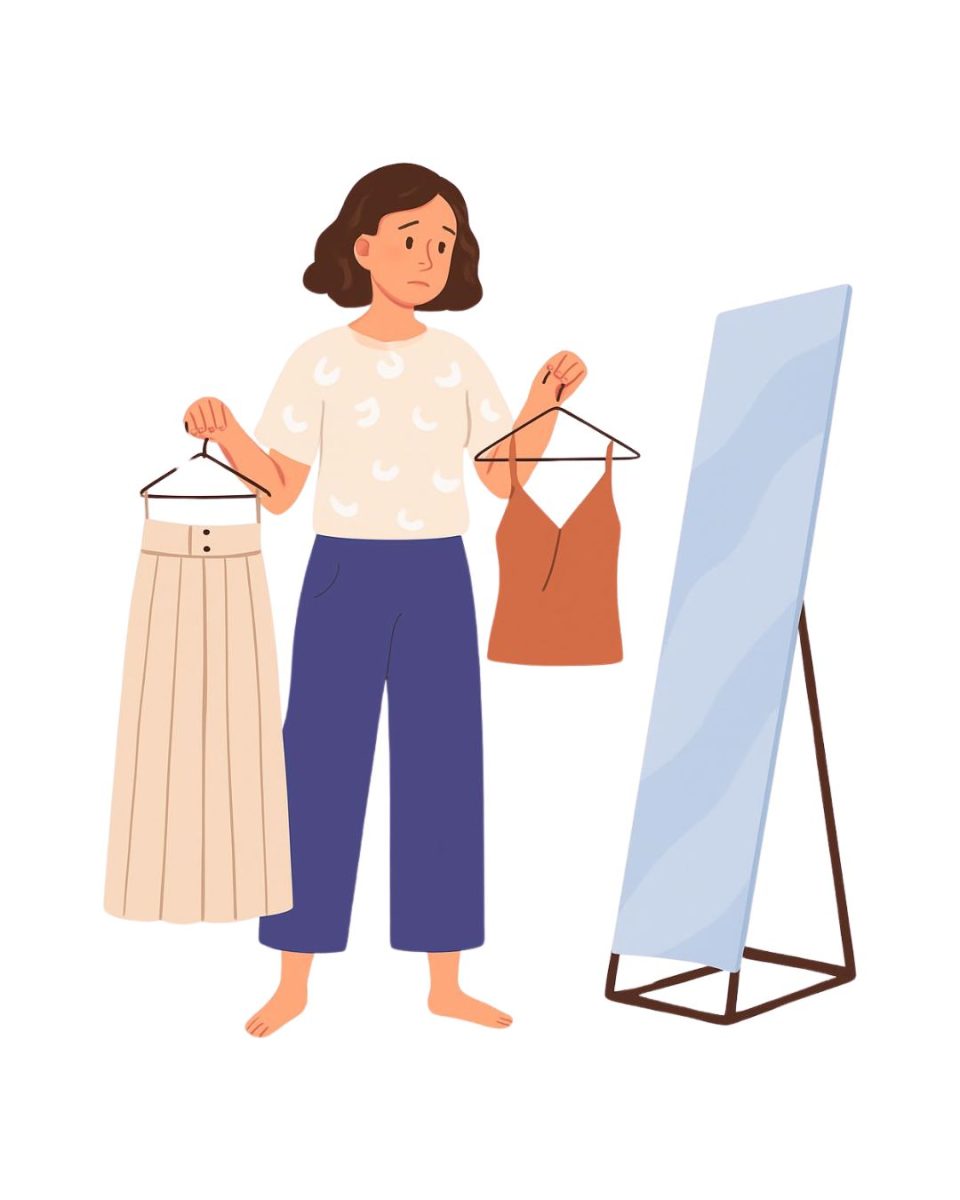










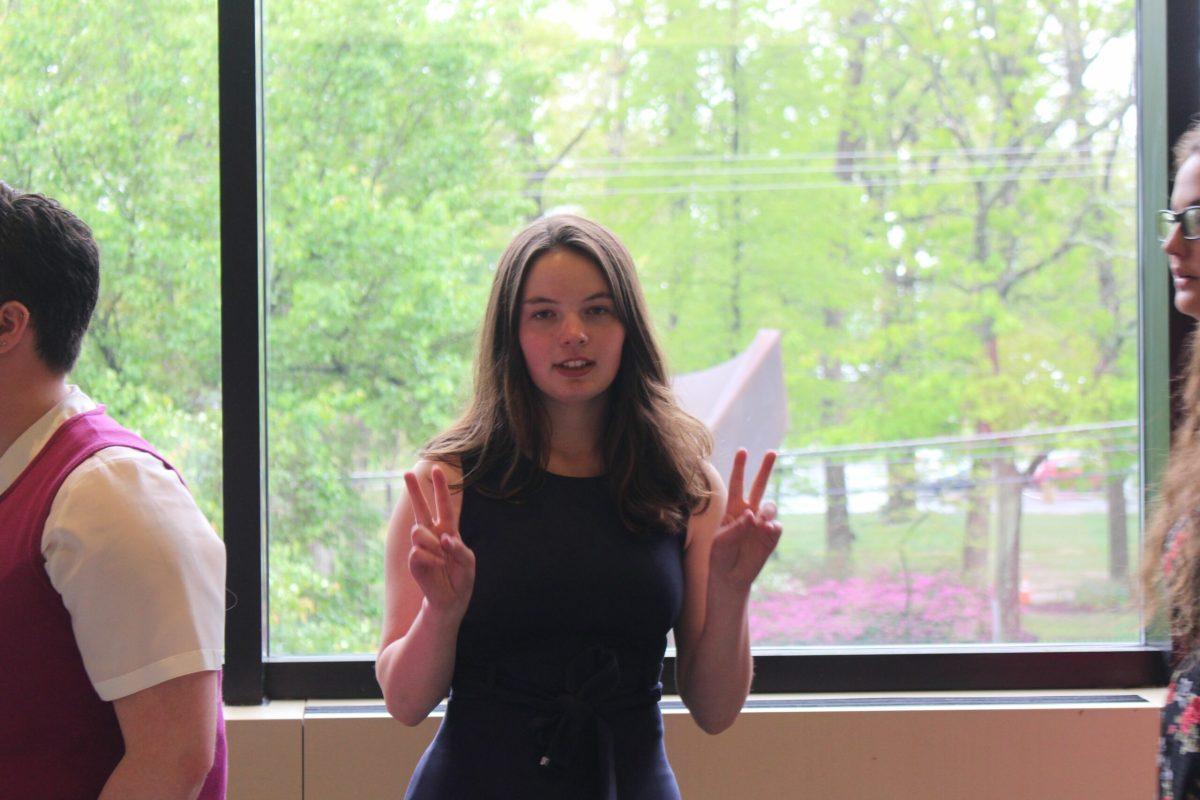


She scrolls with her thumb hovering over the screen, not quite landing, like she’s bracing for something. Her shoulders tighten. Her stomach pulls inward, not because she’s moving, but because she’s thinking about moving, about how it might look if she stood, if she turned to the side, if someone else were watching.
The phone is warm against her palm, tucked between her fingers. For a moment, her eyes flick from the screen to the reflection staring back at her, catching parts of herself she would rather not see. A pause before looking back down at the screen. A quiet calculation begins: what she ate, what she shouldn’t have, what she really wants to. She keeps scrolling.
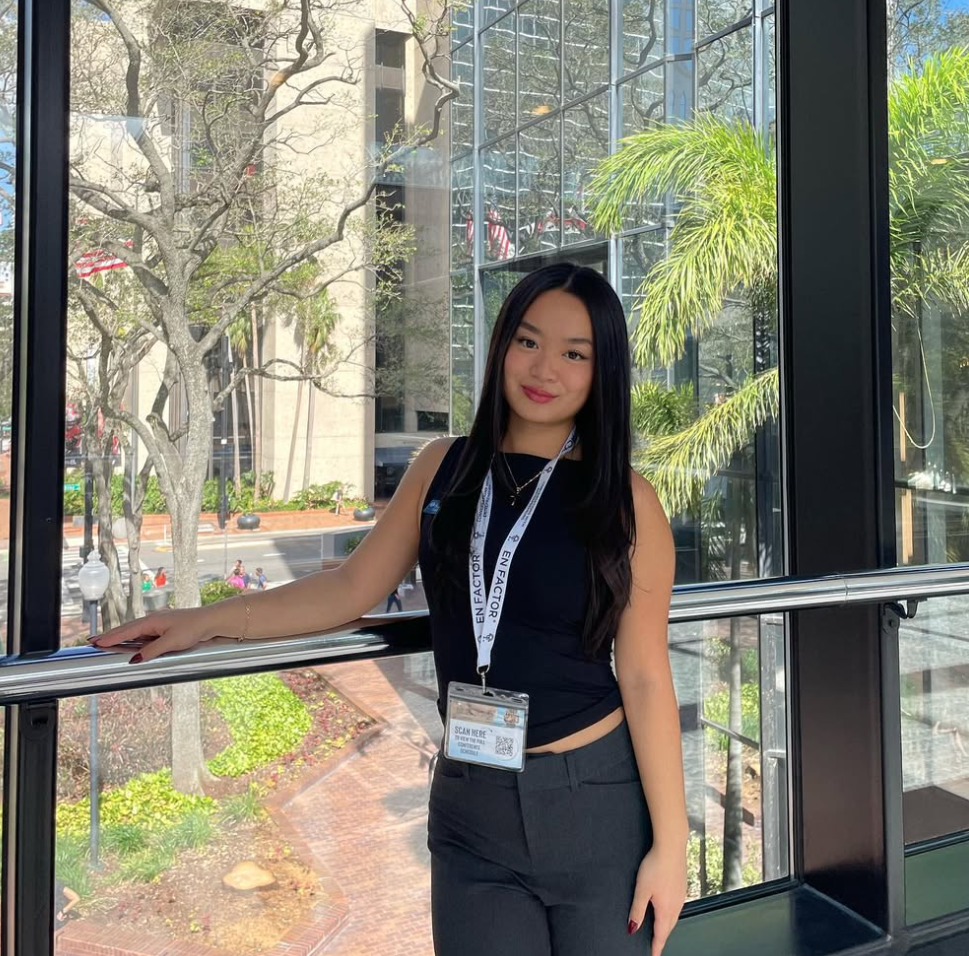
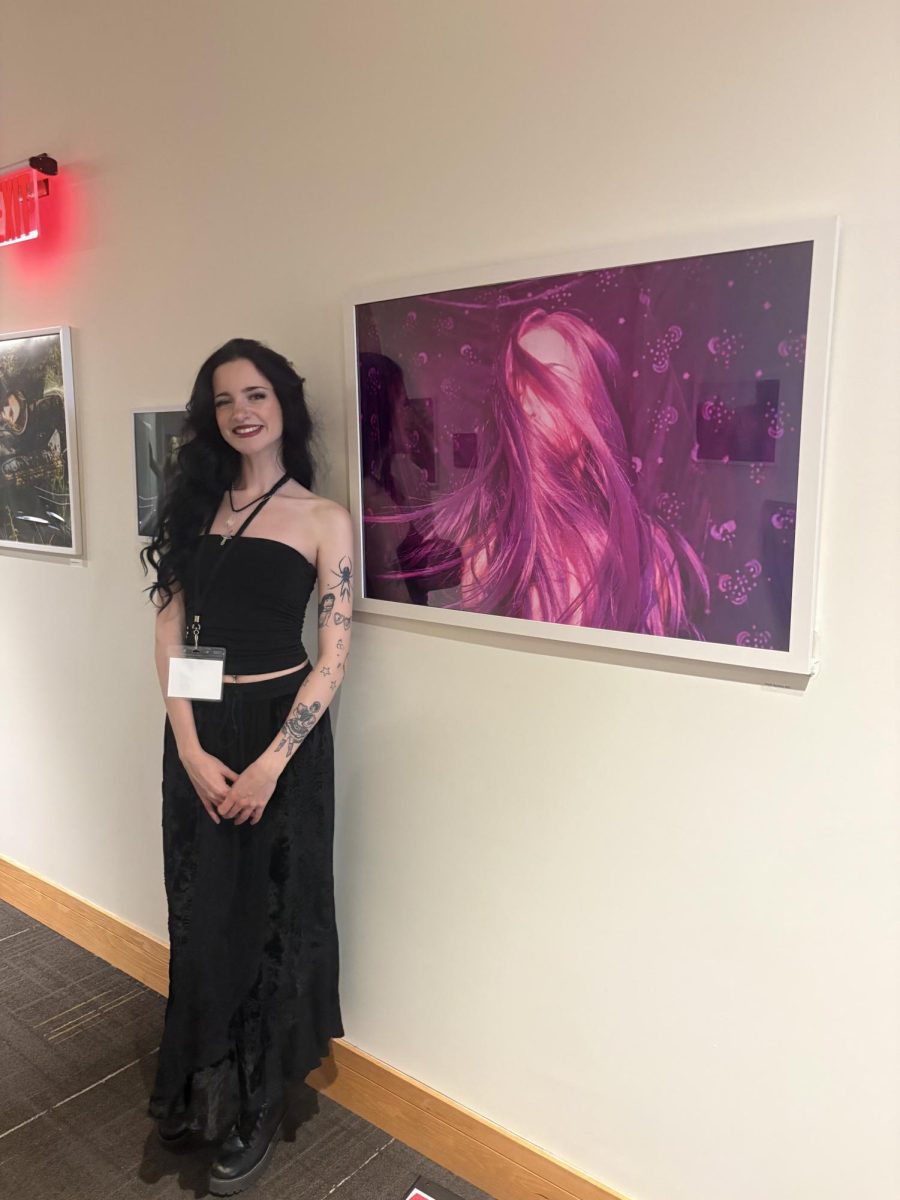
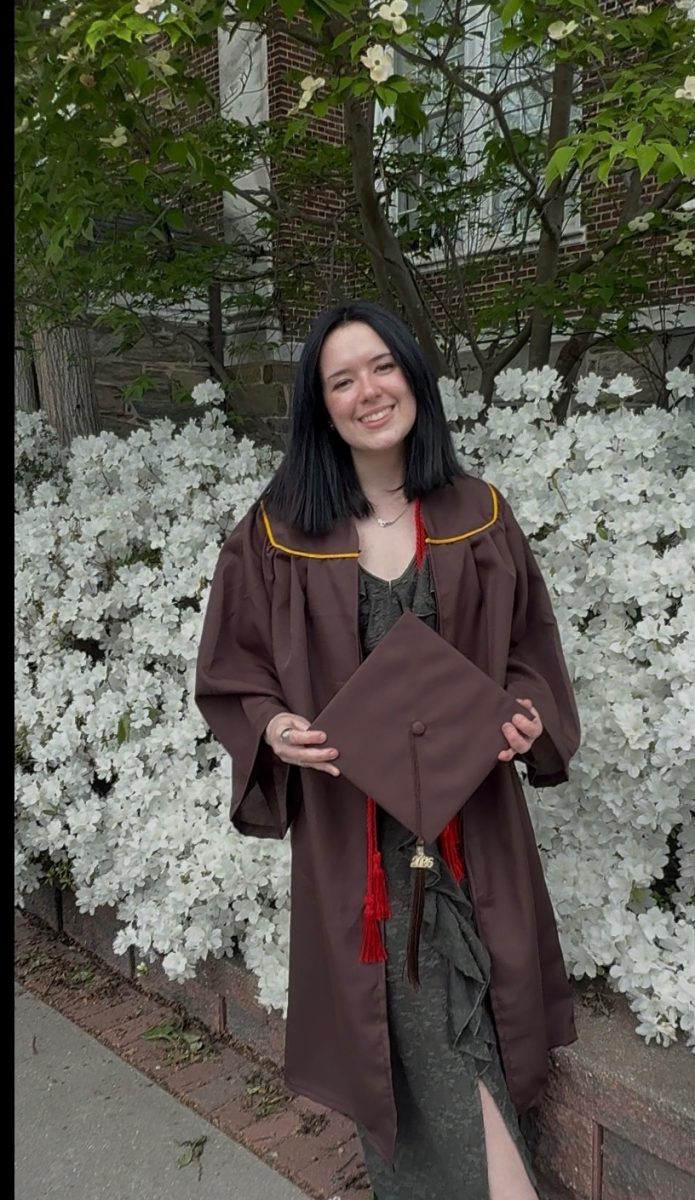
She could be that woman sitting next to you in class. She could be right next to you at the dining hall. She is Liron Prystowsky, a college student attending LaSalle University. Prystowsky says moments like this used to happen constantly.
“Especially 18 to 21,” Prystowsky said. “It was negatively impacting me because all over Instagram, there are these girls with a tiny waist, thick thighs, and clear skin. That’s always the ideal image.”
In high school, Prystowsky felt like she was too skinny, worried that she didn’t fit the ideal body type. Back then, she said, scrolling didn’t feel passive. It felt personal.
“I think it made me look at myself in the mirror differently. I still find myself comparing,” Prystowsky said.
Recently, Prystowsky found herself stuck on a TikTok trend sparked by a contestant from “Love Island,” where women balance sunglasses around their waist to show how small they are.
“My biggest insecurity right now is my stomach,” Prystowsky said. “So when I saw that, and then saw other girls doing it … I was like, I don’t need to see that right now. When I see influencers, it makes me think, why don’t I look like that?”
For college-aged women, social media isn’t just background noise. It’s a daily presence, influencing routines, identities, and self-perception. Platforms like TikTok and Instagram don’t just reflect beauty standards; they repeat them, reward them, and gradually normalize what kinds of bodies are praised, protected, and made visible.
“It feels degrading. Why don’t I look like this? What am I doing wrong? I get sad. I get upset when I’m comparing,” said Prystowsky.
Social media platforms don’t just show content; they decide what stays in view. According to Samantha Lampert, an assistant teaching professor in Rowan University’s Department of Health and Exercise Science and registered dietitian, content that is consumed by female college students is especially powerful.
“That age group, whether they’re conscious or not, is extremely vulnerable to external influences that affect self-confidence and body image,” Lampert said. “What you see on social media is not the norm, but when you take in all that information, it starts to feel like the norm.”
Algorithms intensify that illusion. Once a user engages with a certain type of content, whether it’s weight loss videos, fitness routines, “what I eat in a day” clips, platforms like TikTok and Instagram begin pumping out more of the same.
“The second you get into one of those videos,” Lampert said. “You get more and more and more. And that’s entirely on purpose.”
A 2023 study examining TikTok use among hundreds of female college students found that higher engagement with the app was associated with increased body dissatisfaction, largely due to increased appearance comparison and body surveillance. Even when participants viewed content they perceived as body-positive, the constant visual emphasis on appearance still led to self-criticism. Another peer-reviewed study found that interacting with appearance-focused TikTok content predicted greater exposure to similar algorithm-recommended videos, a pattern that researchers linked to a higher risk for disordered eating behaviors. Rather than neutral entertainment, the algorithm functioned as a feedback loop, reinforcing narrow beauty ideals through repetition.
“Female college students might start to believe that this is how you need to look or eat to receive attention, recognition, or praise,” said Lampert.
Recent studies have shown a strong link between social media filters and the rising demand for cosmetic procedures. A 2023 study found that exposure to edited and filtered images and videos on platforms like Instagram and Snapchat is linked to more people receiving cosmetic surgery. This phenomenon, known as “Snapchat dysmorphia,” reflects how digital aesthetics influence self-perception and, in some cases, drive people to seek surgical enhancements to match their filtered selfies. In response, some platforms like Facebook have banned filters that promote cosmetic surgery to help reduce unrealistic beauty standards.
Beyond the influence of filters and algorithms, experts working with young women are seeing the mental and physical effects these online pressures can create. Kristen Kochenour, a registered dietician, explained how social media shapes self-worth and behavior, sometimes in ways even the users themselves don’t realize.
“It influences it greatly,” Kochenour said. “From a very young age, people are constantly comparing themselves to online images. They see someone online, take it as the full picture, and want to achieve that, even when it isn’t healthy.”
Kochenour pointed to intense programs many influencers promote, like “75 Hard,” where unsustainable routines promise dramatic results.
“People get burned out because it’s temporary weight loss. They’re drawn to extremes without considering long-term effects, sometimes even taking unsafe supplements,” said Kochenour. “They think they’re being healthy, but some content promotes disordered eating—like leaving out certain food groups or pretending to eat on camera.”
Alison Angeles, a student studying Radio, Television, & Film at Rowan University, described social media’s direct impact on her eating.
“I saw influencers’ posts and thought, ‘I have to go harder, my body doesn’t look like that,’” Angeles recalled. “I completely shifted what I was eating and how I was exercising. I started counting calories, feeling guilty about meals, snacking in secret, trying to match what I was seeing online.”
For another Rowan University student studying communication studies, Gabriella DiNapoli, she finds that many social media influencers are portraying a facade.
“I don’t pay attention to gym influencers and people like that because they’re really just trying to profit off of girls who are struggling. You have to realize that it’s all fake and no one’s really showing their true self on social media,” said DiNapoli.
So, if DiNapoli and so many other young women know curated content is fake, why do they still punish themselves for it?
Kristen Kochenour explains that the combination of algorithmic loops and personal insecurities makes it all the more difficult to break free.
“Influencers get paid to influence, and they’re really good at it,” Kochenour said. “They send a specific message that’s manipulated and targeted to a certain demographic.”
In addition, Lampert notes that influencers, who often lack proper credentials regarding nutrition and fitness, spread inaccurate information.
“What works for one person isn’t going to work for everyone. We’re all individuals with different genetics and metabolic needs,” said Lampert.
Moreover, Lampert points out the influencer lifestyle, emphasizing that many influencers have the luxury of time and financial resources that aren’t accessible to the average person.
“They have all the money and time to spend on fitness and wellness, which can set unrealistic expectations,” Lampert said.
Nyrah Wardlow-Matthews, student and president of the Rowan Hip-Hop Culture Club at Rowan University, finds inspiration from credible fitness influencers, noting how they’ve motivated her to implement healthier habits in the kitchen and the gym.
“As long as I’m healthy, let me get in the gym and work out, and put the time and effort to reach my goals,” said Wardlow-Matthews.
While she admits that seeing certain body types online can still spark fleeting insecurity, she makes a conscious effort not to linger there.
“I’m not gonna lie, seeing women with bigger glutes and stuff, it’s like, damn, I wish I had that,” Wardlow-Matthews said. “But I really try not to dwell on the fact that I don’t. I try to focus on how I can build that and just focus on certain things I can eat, like more fiber and protein.”
For the women now navigating these pressures in college, those early stages mark the beginning of a longer story. That sense of déjà vu is echoed across conversations with female college students. While today’s beauty standards are filtered through apps and influencer culture, many students trace their earliest body anxieties back long before they ever downloaded Instagram.
“I would also say the TV shows and movies that we grew up watching [impacted us]. Young girls would be 13 in a show and be talking about how they can’t have too many calories, like in Zoey 101. These are girls who are supposed to portray middle schoolers, I remember being in eighth grade and being like, ‘I gotta look skinny for the school play,'” Prystowsky said. “I was 12 years old.”
Together, these women’s experiences reveal a pattern: the body ideals circulating today are not new; they are recycled, repackaged, and reintroduced to each generation through whatever medium dominates the moment. What once appeared on television screens now lives in the palm of a hand, personalized and constant.
So, she keeps scrolling.
Not because she wants to, but because stopping would mean sitting with the feeling she’s been trying to outrun. The phone eventually goes dark. Her reflection remains. Nothing about her body has changed in the last few minutes, yet the weight of it feels heavier than before.
“What we see online is never the full picture,” Kristen Kochenour said. “It’s tied up neatly with a bow. You don’t see what’s happening behind the scenes. People don’t want to live restricted. They want to enjoy food, be social, and feel good in their bodies, but social media makes them forget that.”
For comments/questions about this story, DM us on Instagram @thewhitatrowan or email [email protected]